



 polski
  Deutsch
  English

The Impact of UV Radiation on Worker Health – Modern Occupational Health and Safety Standards
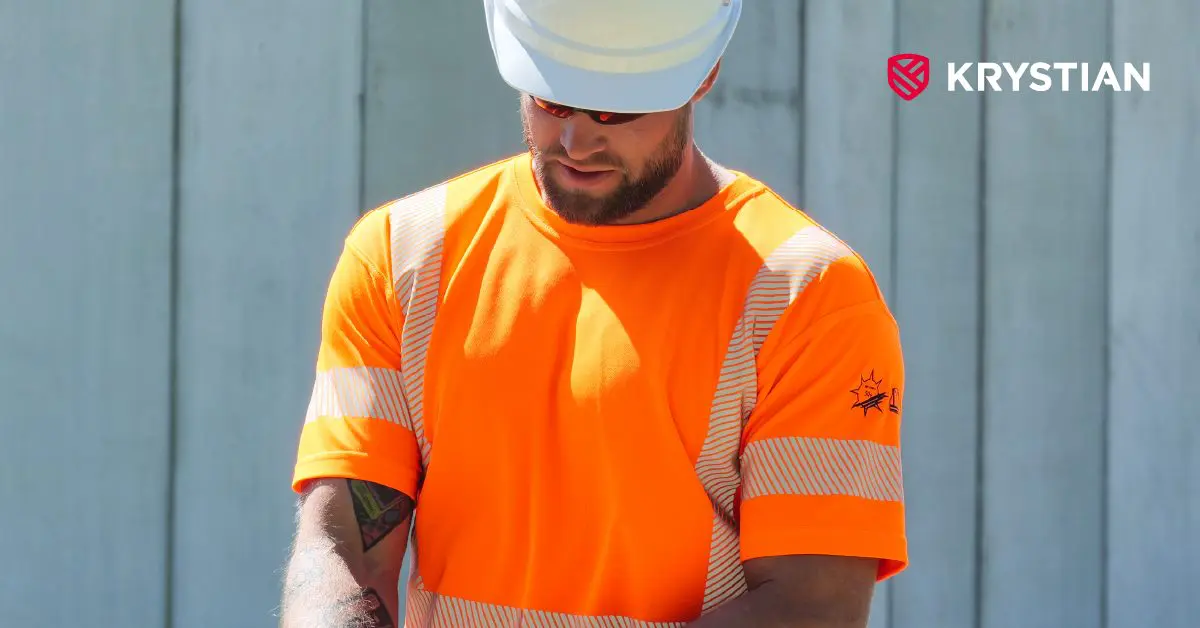 Excessive exposure to ultraviolet (UV) radiation is one of the most underestimated hazards in the workplace. For sectors such as construction, logistics, and municipal services, solar radiation is a carcinogenic factor that requires systemic protection.
What is UV radiation and how does it affect our health?
UV (ultraviolet) radiation is electromagnetic radiation invisible to the human eye, with a wavelength of 100–400 nm. It originates primarily from the sun, as well as from artificial sources (e.g. sunbeds). It is divided into UVA (skin ageing), UVB (tanning, burns) and UVC (disinfection and sterilisation). It is essential for vitamin D synthesis, but harmful in excess. Unfortunately, outdoor work cannot be avoided in certain industries.
What are the types of radiation?
- UVA (320–400 nm): Penetrates deeply, causes photoageing of the skin (wrinkles) and reaches the ground throughout the year.
- UVB (280–320 nm): Responsible for tanning and sunburn. Partially absorbed by the ozone layer.
- UVC (100–280 nm): The most harmful, but almost entirely absorbed by the atmosphere.
What risks does long-term exposure to UV radiation entail?
The effects of excessive UV radiation on the skin are well documented. Excessive UV exposure can damage DNA in skin cells, increasing the risk of mutations and the development of skin cancers, including melanoma – the most dangerous form of skin cancer. Moreover, skin cancer is one of the most common types of cancer in the world.
Melanoma in Europe – current data and forecasts
Europe ranks first in the world for melanoma incidence. In 2020, the continent recorded over 150,000 new cases, accounting for 50% of all diagnoses of this cancer worldwide and responsible for 45% of global deaths from the disease.
Statistics by region:
- Northern Europe (including Denmark, Finland, Sweden, Norway, the United Kingdom): melanoma is the 5th most common cancer in men (18,365 cases; 4.8%) and the 4th in women (17,761 cases; 5.3%).
- Western Europe (including Germany, France, Belgium, the Netherlands): this cancer ranks 5th in incidence in both men (28,062 cases; 3.7%) and women (26,833 cases; 4.1%).
In the 15–49 age group, melanoma is the most frequently diagnosed cancer in Europe, accounting for 8% of all new cases.
Melanoma in Poland – statistics and incidence
Based on data from Polish oncological institutions, including the National Cancer Registry (KRN), the situation in Poland is as follows:
- Number of new cases – Poland currently diagnoses over 4,000 new cases of skin melanoma annually (data for 2022 indicates exactly 4,028 cases).
- Growth dynamics – over the past decade, the number of cases in Poland has almost doubled. It is one of the cancers with the highest growth rate.
Prof. Piotr Rutkowski, Head of the Department of Soft Tissue/Bone Sarcoma and Melanoma at the Maria Skłodowska-Curie National Institute of Oncology – PIB in Warsaw, notes that the increase in melanoma incidence is greater than for lung cancer, which is the most common malignancy in Poland. “Over the past 10 years, the number of melanoma cases has almost doubled and currently stands at approximately 4,200” – said the oncologist, who serves as Chairman of the Scientific Council of the Melanoma Academy.
What are the forecasts for Europe up to 2040?
Europe currently accounts for 46% of all skin cancer cases worldwide attributed to solar radiation.
- Rising incidence. It is projected that by 2040, the overall number of skin cancer cases in Europe will increase by 34%. For melanoma specifically, the increase is estimated at 20% in men and 8% in women.
- Rising mortality. The number of melanoma deaths in Europe may rise by 27% by 2040.
- Main causes. The primary factors driving these statistics are an ageing population and excessive exposure to UV radiation.
These figures cannot be ignored. For outdoor workers and their employers, sun protection should become a priority.
What are the health effects of UV radiation in the workplace?
Long-term outdoor work without a professional protective barrier leads to a range of adverse consequences:
- Immediate: painful sunburn, erythema, and allergic reactions.
- Long-term: accelerated skin ageing (photoageing) and weakening of the immune system.
- Critical: increased risk of developing melanoma. According to data from the Melanoma Academy in Poland, as many as 66.9% of melanoma cases result from excessive sun exposure.
Excessive exposure to UV radiation can also affect the worker’s immune system. It damages cells in the body, including immune cells – ultimately leading to reduced resistance to infections and diseases. A weakened immune system can increase the risk of employee sick leave.
Workers exposed to UV radiation may also experience:
- frequent headaches;
- a burning sensation on the skin;
- increased susceptibility to skin allergies.
What is the employer’s role in UV radiation protection?
It is the employer’s responsibility to provide workers with appropriate protective clothing and personal protective equipment.
It is worth noting that all clothing provides some degree of skin protection – however, not all fabrics offer sufficient protection against UV radiation.
Why does ordinary cotton not protect workers?
A common misconception is that any item of clothing constitutes an effective barrier. Standard cotton clothing provides only a false sense of security:
- Low protection level: an ordinary T-shirt typically offers only UPF 10.
- Loss of properties when wet: when a worker perspires, the protection of ordinary cotton drops to a critical level of UPF 3.
- Lack of certification: products from general retailers do not guarantee a consistent weave density, which is critical for blocking UVA and UVB rays.
In contrast, professional UVGuard clothing from PW Krystian provides a consistent UPF 50+ rating, blocking over 97.5% of radiation, regardless of moisture or fabric stretching.
What does the EN 13758-2+A1:2006 standard specify?
In accordance with the requirements of EN 13758-2+A1:2006 (PN-EN 13758-2+A1:2007/AP1:2021-08), protective clothing must have an ultraviolet protection factor (UPF) of at least 40 (UPF > 40).
A key advantage of PW Krystian solutions is their durability in use. Whilst inexpensive alternatives lose their protective properties after just a few washes, our protective barrier remains unchanged even after 50 washing cycles.
Ecology and ergonomics in modern technologies
Modern occupational health and safety combines biological safety with working comfort. In collections such as MultiGuard, VisGuard, ArcGuard and CoolGuard, we employ technologies that raise workplace standards:
- Lyocell fibres and recycled polyester – thermoactive fabrics supporting natural temperature regulation.
- Argana CoolSkin technology – active body cooling whilst simultaneously blocking UV radiation (ideal for heat stress situations).
- Cordura reinforcements – increased mechanical resistance where the work is most demanding.
- Visibility (EN ISO 20471) – combining UV protection with reflective elements for the road and logistics sectors.
Sector application – who needs UPF 50+ protection?
Providing certified clothing is the employer’s obligation wherever work takes place outdoors:
- Construction and road works: Sun protection combined with high visibility.
- Transport and logistics: Thermal comfort during multi-hour operations.
- Municipal services: Durability of clothing with daily exposure to full sunlight.
Would you like to raise your health and safety standards and protect your workers’ health? Choose certified UPF 50+ solutions from PW Krystian. Contact us to tailor our offer to your industry.
Sources
- GLOBOCAN 2022 – Melanoma Fact Sheet (IARC/WHO): https://gco.iarc.who.int/media/globocan/factsheets/cancers/16-melanoma-of-skin-fact-sheet.pdf
- GLOBOCAN 2022 Analysis for Europe (BMC Cancer, 2025): https://pmc.ncbi.nlm.nih.gov/articles/PMC11905646/
- “Skin cancer in Europe today and challenges for tomorrow” (JEADV/EuroSkin, 2024): https://euroskin.org/wp-content/uploads/2024/10/Brochez-JEADV2024_Skin-cancer-in-Europe-today-and-challenges-for-tomorrow.pdf
- Melanoma in Poland – statistics and incidence: https://onkologia.pacjent.gov.pl/pl/kompendium-chorob-nowotworowych/czerniak/epidemiologia
- Expert quote, Prof. Piotr Rutkowski: https://www.onkonet.pl/n_n_czerniak_wzrost_zachorowan.php
FAQ Section
Not always. Only clothing with a UPF 40+ or 50+ certification blocks radiation to a sufficient degree to effectively reduce the risk of skin cancer during prolonged work.
It is a European standard confirming that the material has been tested for blocking UVA and UVB rays, and that its protective properties are durable.
Water and perspiration loosen the weave of ordinary fabrics, allowing UV rays to penetrate the skin more easily. Professional clothing from PW Krystian eliminates this problem.
PW Krystian clothing guarantees consistent protection for up to 50 washing cycles, making it the most cost-effective choice for businesses
Last updated: 28.05.2026